Make a Plan Campaign
Stay Aware. Save Lives.
The Safe Lane Transportation Coalition (SLTC) is working to help people in Lane County think through their drive before it begins—setting your route and your playlist, putting the phone away and keeping your mind on the drive. “Make a Plan” is the central message of this county-wide campaign.
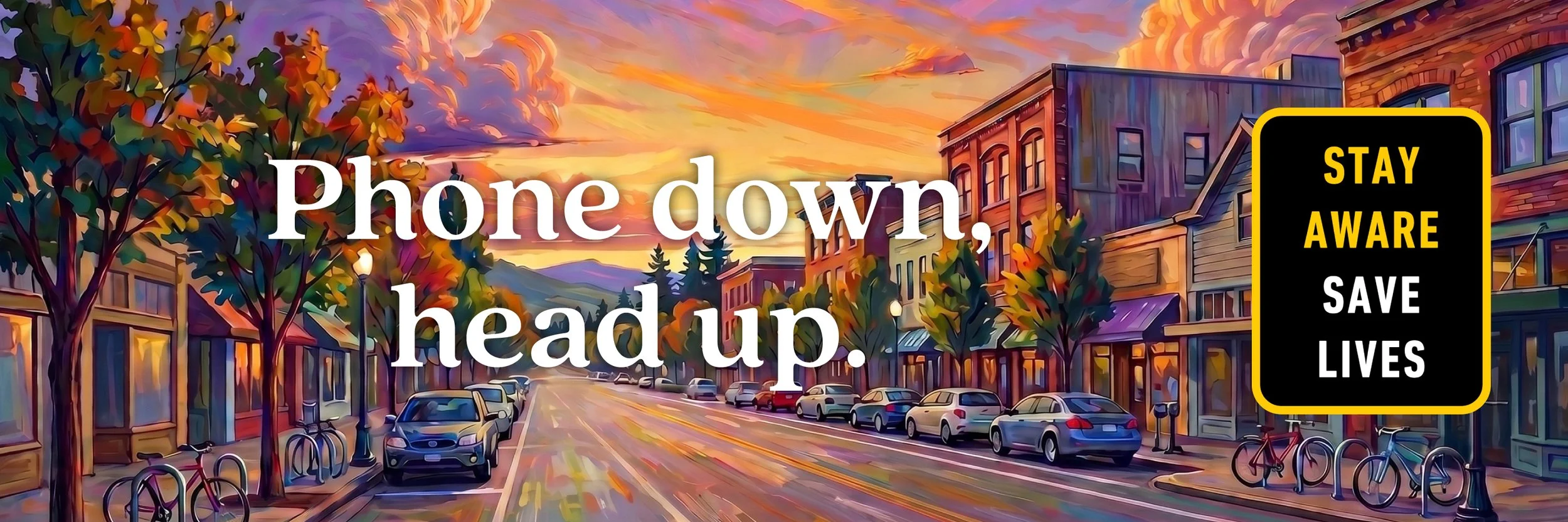
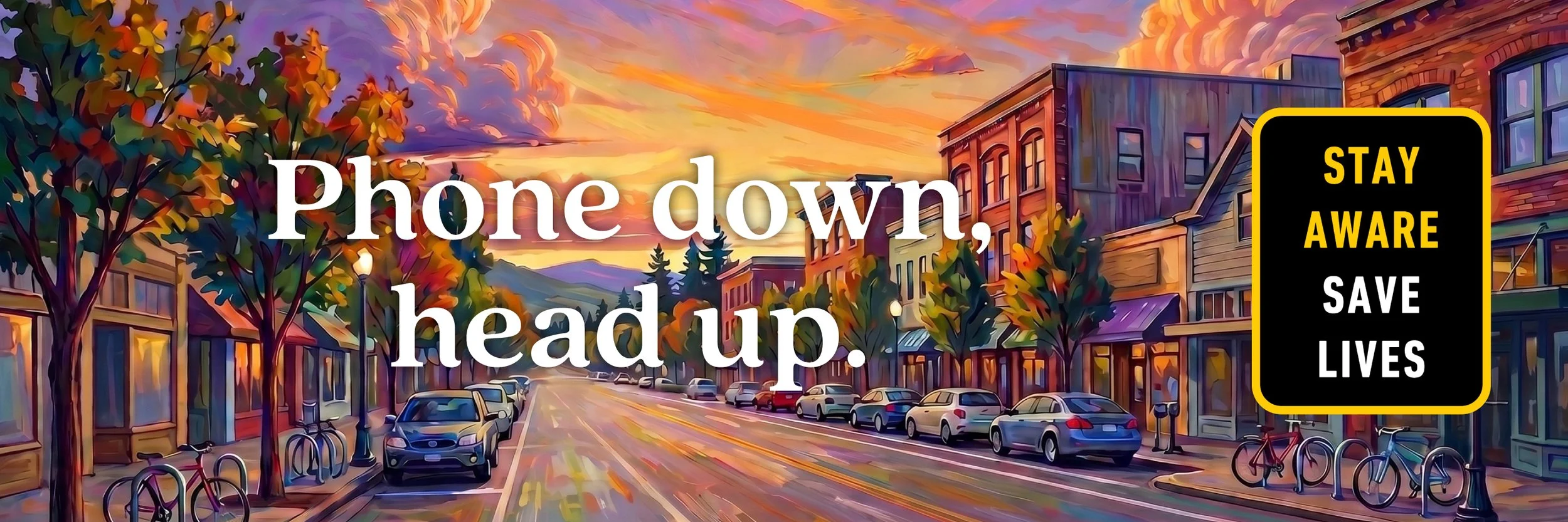
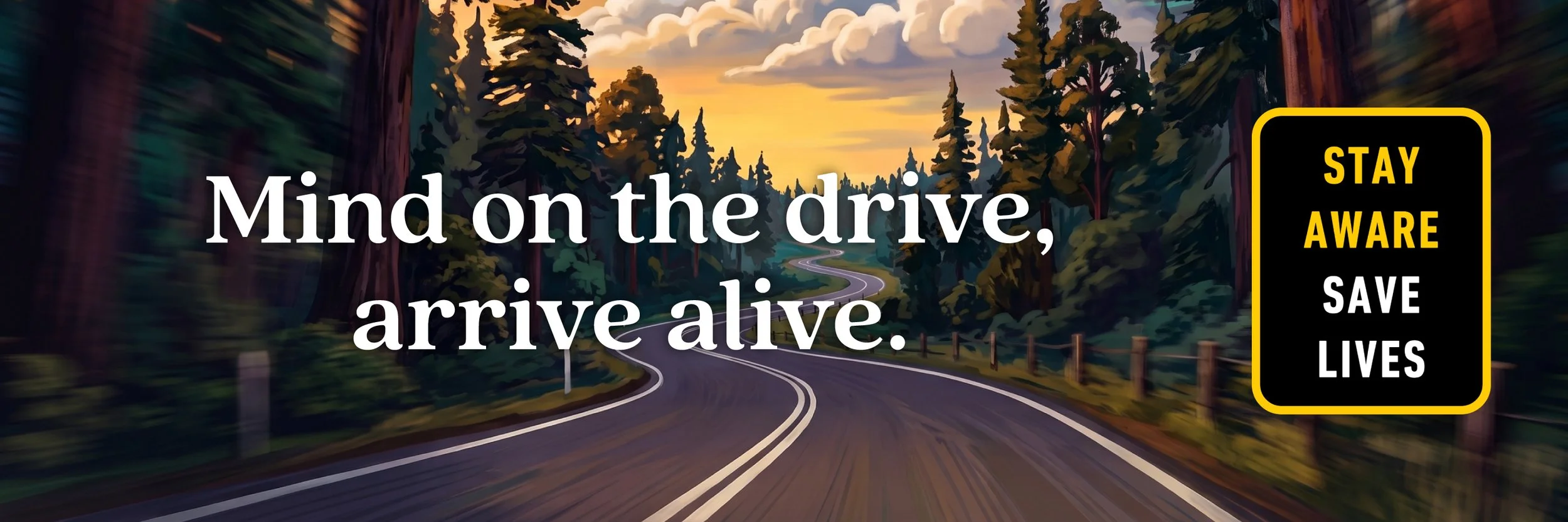
Distraction is anything that pulls your attention away from driving: a text, a call, a map—or a mind that’s somewhere else. You can have both hands on the wheel and both eyes on the road and still miss what’s in front of you. Phone down, head up. Mind on the drive, arrive alive.
In addition to staying aware behind the wheel, driving sober and reducing speed are also central to our outreach. Learn more about our Speed Reduction Campaign and our DUII Prevention Campaign.
How You Can Help
We’ve created digital toolkits that include downloadable content, making it easy for you to share the “Make a Plan” campaign on your own social media channels. Your communication efforts can help save lives!
Also available are “Make a Plan” printed materials for distribution at events, schools, businesses, clinics, and more. To request these materials, please email Safe Lane Coalition Coordinator.
Download all assets from the digital toolkit or choose from the following individual assets below, then follow each social platform’s instructions for uploading and posting graphics, written messaging, and optional hashtags. Thank you for supporting our efforts!
-
-
We have these materials printed and ready to hand out. Contact us if you want free printed materials at your event.
-
Almost everyone agrees that using a mobile device and driving is dangerous—and many people do it anyway. Drivers tend to believe distraction is a problem caused by other drivers, and that their own quick glance, short call or wandering thought is the manageable exception. Hands-free technology has reinforced that belief. Like DUII crashes, distracted driving crashes are preventable, but the public treats them as an unavoidable cost of being on the road.
-
In Oregon
From 2019 to 2023, there were 28,699 crashes involving a distracted driver, resulting in 221 fatalities and 28,332 injuries. Of those, 1,987 crashes involved a driver reported to have been using a cell phone at the time of the crash, resulting in 26 fatalities and 1,790 injuries.
Over the same period, there were 62,237 convictions under Oregon’s distracted driving law (ORS 811.507).
Nationally
In 2024, an estimated 315,167 people were injured, and 3,208 people were killed in motor vehicle traffic crashes involving distracted drivers.
An estimated 13 percent of injury crashes, 8 percent of fatal crashes and 12 percent of all police-reported crashes in 2024 were reported as distraction-affected.
In 2024, 639 people outside a vehicle—pedestrians, people on bikes and others—were killed in distraction-affected crashes.
Why these numbers are almost certainly low
Distraction is hard to see after the fact. Unless investigators can access a driver’s phone or a witness saw what happened, there’s often no way to confirm that a phone was involved. A wandering mind leaves almost no evidence at all, so it is rarely captured on a crash report. The counts above reflect what could be documented—not everything that occurred.
Sources: Oregon Department of Transportation, 2019–2023 data. National Highway Traffic Safety Administration, 2024 data, published April 2026.
-
Oregon’s distracted driving law, ORS 811.507, makes it illegal to drive while holding and using a mobile electronic device—a phone, tablet, GPS unit or laptop. The law applies when you are stopped at a red light or waiting in traffic; it does not apply when you are parked in a designated parking spot.
Hands-free and built-in devices are permitted for drivers 18 and older, as is a single touch or swipe to activate or deactivate a device. Drivers under 18 may not use a mobile device at all.
A first offense that does not contribute to a crash is a Class B violation, with a maximum fine of $1,000. A second offense—or a first offense that contributes to a crash—is a Class A violation, with a maximum fine of $2,000. A third offense within ten years is a Class B misdemeanor, which carries a maximum fine of $2,500 and the possibility of jail time.
-
Set up before you start. Enter your destination, choose your playlist, adjust mirrors and climate, and send any message that needs sending—all before you shift out of park.
Turn on Do Not Disturb While Driving. Both iPhone and Android can silence notifications automatically once the car starts moving and send an auto-reply on your behalf.
Put the phone out of reach. A phone in a bag on the back seat cannot be answered at a red light. A phone in the cupholder can.
Give your passenger a job. Navigation, music, texts and calls are all easier from the passenger seat. Ask for the help.
Remember that hands-free is not attention-free. Voice commands keep your hands on the wheel and your eyes forward, but your mind can still be somewhere else—and a mind that’s somewhere else is a distracted driver.
Settle your mind before you drive. If you are leaving an argument, a hard shift at work or bad news, take a minute in the parking lot before you leave.
Rest before you roll. Tiredness drains the mental energy it takes to stay focused, even on a short trip.
Stay curious on familiar roads. The commute you could drive in your sleep is exactly the one where attention drifts. Look for what has changed since yesterday.
Pull over when you need to. If a call cannot wait, if a child needs help, or if your thoughts will not settle, find a safe place to stop. Stopped in traffic is not a safe place to stop.
Speak up as a passenger. Offer to take the phone. Be the passenger who praises good driving behavior.
Talk with teen drivers. Set the expectation early—and model it.
-
Distracted Driving Awareness Month (April)
Summer road trips and coast travel
Back to school
Holiday travel weekends
High-visibility enforcement periods
Winter weather events, when following distance and reaction time matter most
-
Our goal is to reduce the number of preventable deaths and serious injuries caused by distracted driving through community outreach and education campaigns. We want people to think through their drive before it begins—where the phone goes, who handles navigation, what can wait—and to treat full attention as a normal part of getting behind the wheel rather than an unusual effort.
-
To end preventable distraction-related deaths, our concept of acceptable driving behavior must change. This “Make a Plan” campaign imagines a community of drivers who prepare before they start and keep their attention on the road and the people sharing it. The campaign creative builds on research—surveys, focus groups and secondary research—conducted in 2023–24, which showed that drivers respond most favorably to positive, memorable, catchy messages paired with engaging graphics that reinforce the behavior we want rather than the behavior we fear. The “Make a Plan” research and outreach campaigns were developed in partnership with Turell Group.
ABOUT SAFE LANE TRANSPORTATION COALITION
The Safe Lane Transportation Coalition is a collaborative group of individuals, organizations, and governmental agencies working to reduce fatalities and severe injury crashes in Lane County. The coalition utilizes the strengths and resources of its members’ organizations to establish transportation safety policies, programs, and practices. The coalition adopts a harm reduction approach and implements strategies that address speed reduction, DUII prevention, and traffic safety education and outreach.